Citizens to Traitors: Bengali Internment in Pakistan, 1971–1974
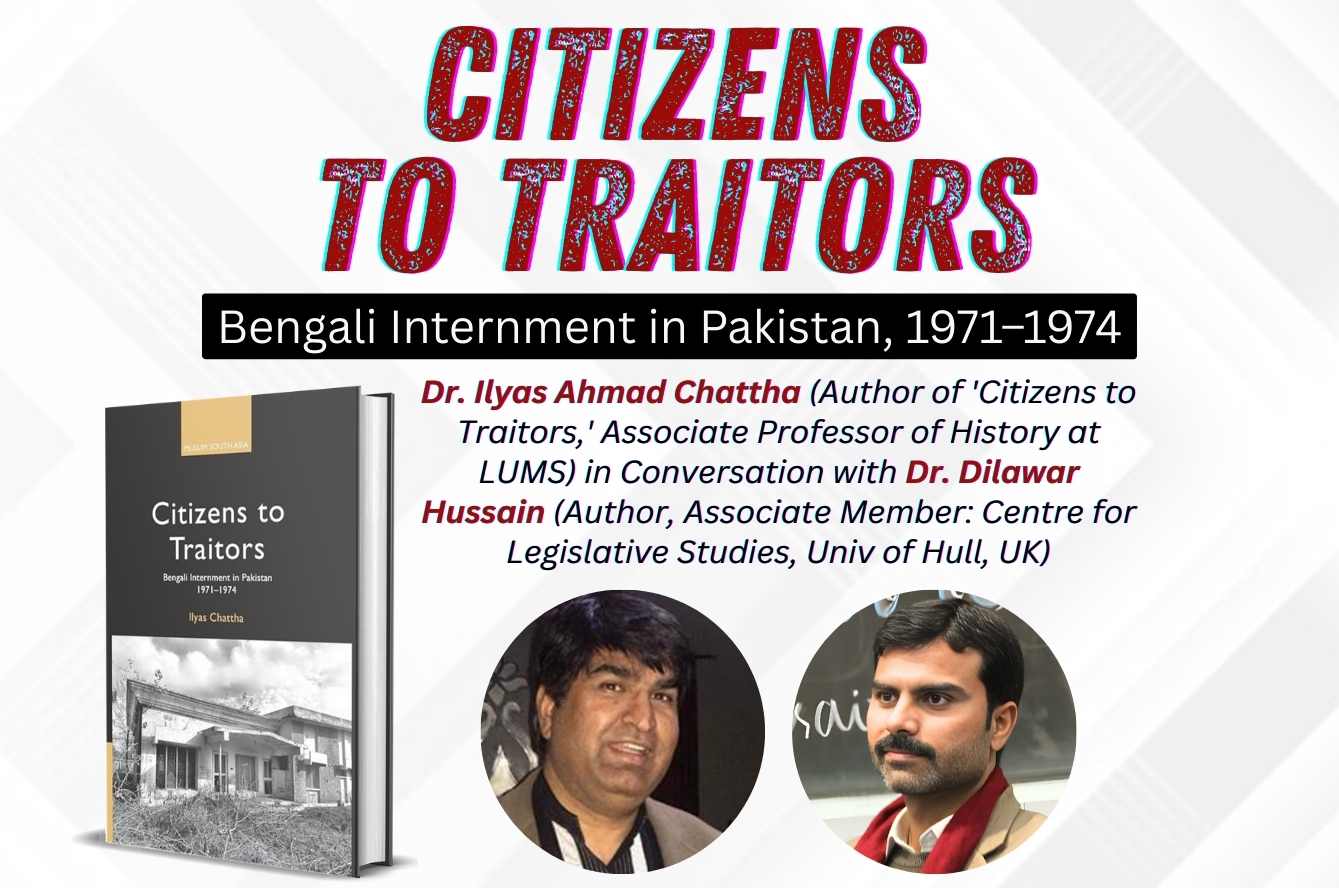
The break-up of Pakistan in 1971 following a bloody civil war and military defeat by India is wrapped in layers of silences, making it difficult to ferret out the truth from the mistruths. The war ended with over 90,000 Pakistani prisoners of war (POWs) captured in East Pakistan–turned-Bangladesh, who were then transferred to Indian custody. Pakistan responded by interning roughly the same number of Bengali co-religionists in West Pakistan as leverage for the return of its captured POWs. Neither group would return home immediately in what arguably became one of the largest cases of mutual mass internment since 1945. Drawing on a wide range of untapped sources, this book traces the trajectory of this crisis of captivity in which the Bengalis found themselves as rightless citizens with ‘traitor’ and ‘enemy’ status after the Bangladesh War. Over half a century after the 1971 war, the internment of Bengalis remains a non-event in the most significant political crisis in Pakistan’s history. This book explains this silence in the historiography.
About the Author:
Educated at the universities of Warwick and Southampton (UK), Ilyas Chattha is a historian of South Asia. Prior to his LUMS, he was based at the Centre for Imperial and Post-Colonial Studies, University of Southampton, he has also been associated with the University of Warwick and SOAS, University of London. He has written extensively on late colonial Punjab and the legacy of the 1947 partition for the early post-colonial Pakistan state. He is author of The Punjab Borderland: Mobility, Materiality and Militancy, 1947-1987 (Cambridge, 2022); and Partition and Locality: Violence, Migration and Development in Gujranwala and Sialkot, 1947-1961 (Oxford, 2012). His third upcoming monograph, Traitors: An Untold Story of Bengali Internment in Pakistan, 1971-1974 (Cambridge, 2024) is on the 1971 wartime experiences of Bengalis in West Pakistan. In addition, Dr Chattha has published extensively in reputed academic journals such as Modern Asian Studies, History Workshop Journal, Journal of Royal Asiatic Society, Indian Economic and Social History Review and South Asia: Journal of South Asian Studies, as well as in numerous edited volume and other publications. His current teaching work is focused on the people’s history, archives, and the legacies of the violent partitions of 1947 and 1971 and methods in collective violence as well as topics within borders and borderlands studies. His current course offerings include: A People’s History of Pakistan; Partition and Its Aftermath; Civil War in 20th Century; Communal Violence in South Asia; Conceptual Understanding of Borders and Borderland Studies; and Archives and Narratives.
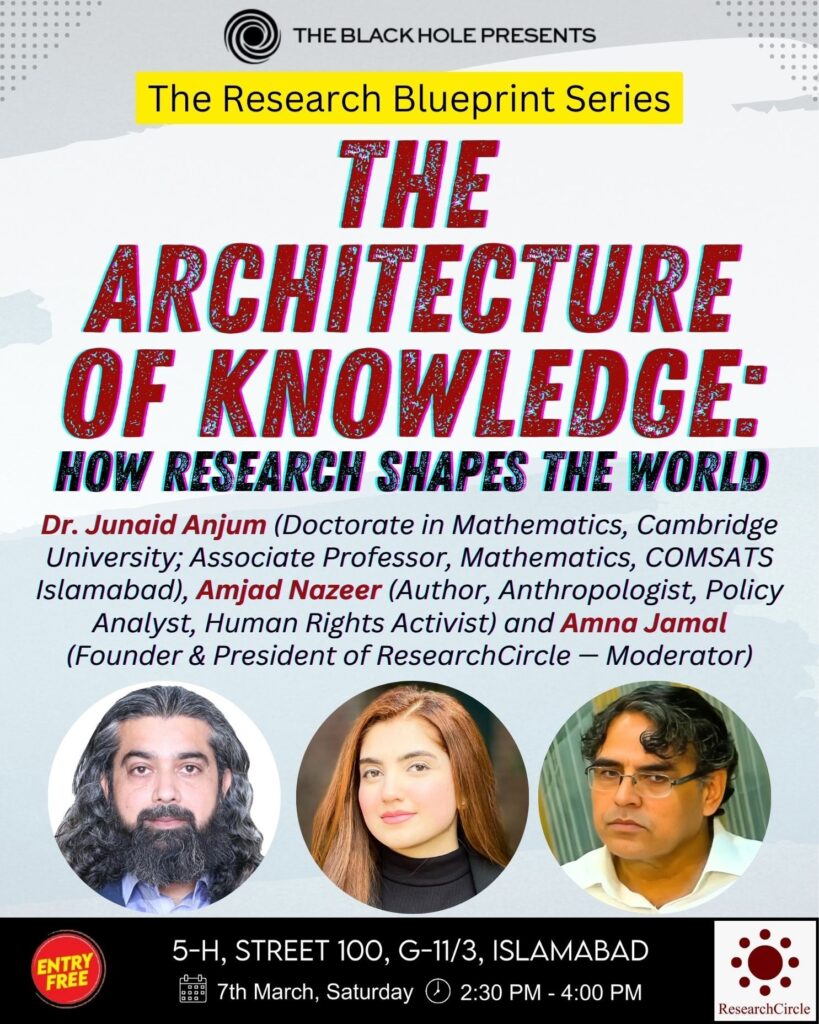
This session is free and open to all. Just visit the venue to attend it.
The Black Hole
Plot 5H, Street 100, G-11/3, Islamabad.
Click here for Google Maps Location